
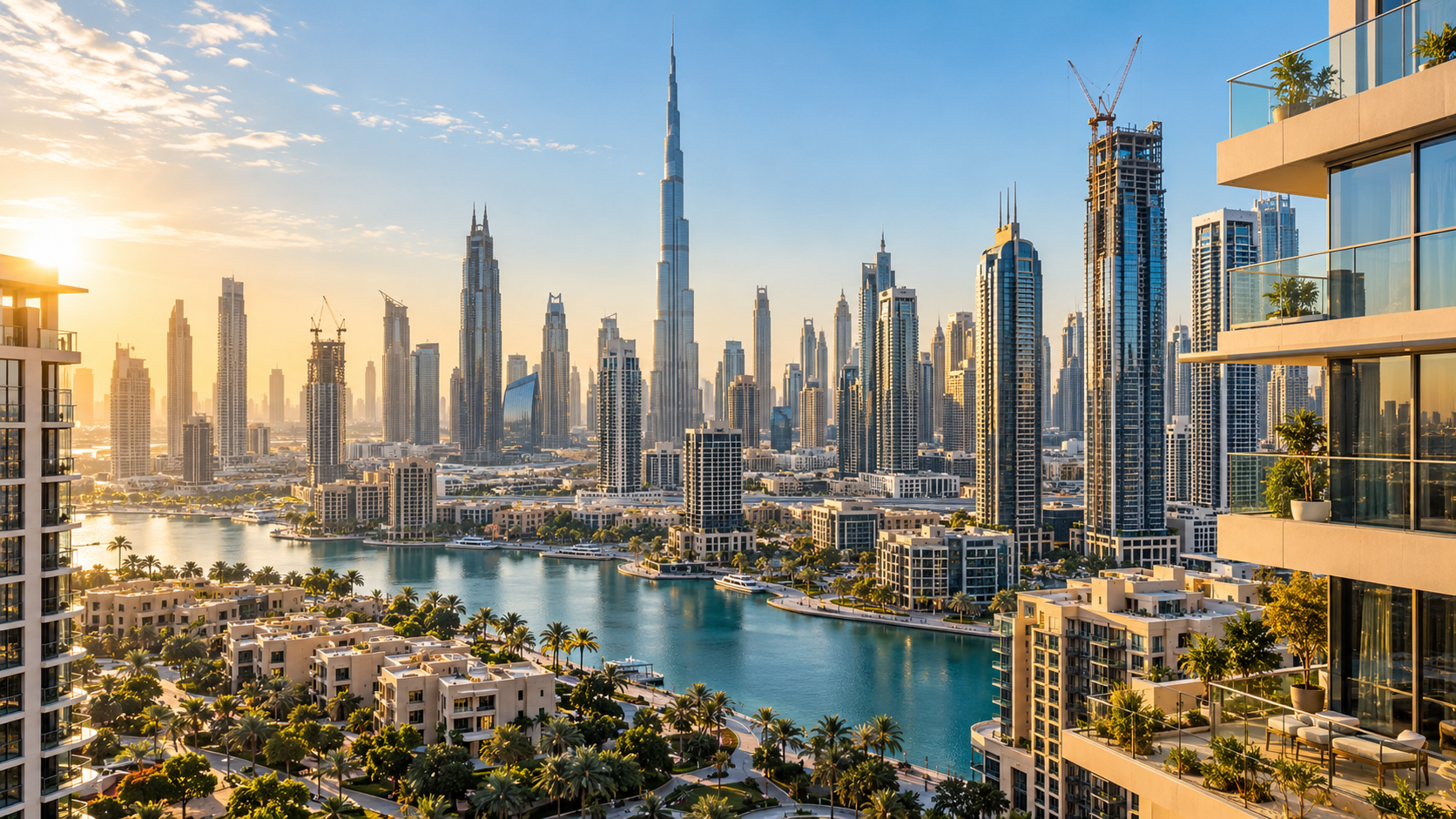
Will Dubai property prices continue rising in 2027, or could increasing supply create a more balanced market? This is one of the biggest questions for investors, homebuyers and property owners as Dubai's real estate market moves into a new phase.
The answer may depend less on headline price growth and more on supply, demand, population growth, rental performance and the type of property being considered.
Dubai Real Estate in 2026: A Market in Transition
Dubai's residential market has shown signs of moderation during 2026. CBRE reported that residential demand softened during Q2, while additional supply eased pricing pressure.
At the same time, the market has not simply stopped growing. Dubai added approximately 24,800 residential units during H1 2026, while the development pipeline remains substantial. Around 162,500 units are currently projected for delivery in 2027, according to Cavendish Maxwell data reported in July.
Quick Market Check
Ask yourself:
If more homes become available, what happens when buyers have more properties to compare?
Greater choice can increase competition between developers and sellers and may give buyers more negotiating power.
What Could Happen to Dubai Property Prices in 2027?
There is no single market-wide answer.
Emaar founder Mohamed Alabbar recently said that Dubai property prices could see a 5–10% adjustment as significant new supply enters the market by 2027, while also noting that market conditions could change quickly if broader conditions improve. This is an industry view, not a guaranteed forecast.
This makes property selection increasingly important.
Prime locations with strong connectivity, established amenities and sustained demand may behave differently from locations where a large number of similar units are being delivered simultaneously.
Think Like an Investor
Imagine you have two options:
Property A: An established community with strong existing rental demand.
Property B: A new development where many comparable units are scheduled for handover.
Which factors would you compare first?
- Purchase price
- Expected rental income
- Service charges
- Location and connectivity
- Developer track record
- Upcoming competing supply
- Payment plan
- Resale potential
The answer should come from the numbers rather than simply following a market headline.
Population Growth Could Support Long-Term Demand
Dubai's population continues to be an important demand driver. More than 161,000 people moved to Dubai between the beginning of 2026 and the end of July, taking the population to approximately 4.74 million, according to figures reported by Cavendish Maxwell. However, population growth does not automatically translate into immediate property-price increases; supply, financing conditions and investor sentiment also influence prices.
So, Rise or Stabilise?
The 2027 Dubai property market could potentially become more selective and balanced, rather than moving uniformly in one direction.
For buyers, increased supply could mean more choice and potentially greater negotiating opportunities. For investors, the focus may increasingly shift toward location, rental demand, property quality, developer credibility and realistic returns.
Your 2027 Property Checklist
Before buying, ask:
- Is the location supported by existing demand?
- How much competing supply is coming?
- What rental income is realistically achievable?
- What are the service and ownership costs?
- Is the payment plan suitable?
- What is the property's potential resale market?
The key question for 2027 may therefore not be “Will Dubai property prices rise?” but “Which Dubai properties are positioned to remain attractive as the market becomes more balanced?”
For investors, understanding these differences could be more valuable than simply trying to predict the next market-wide price movement.